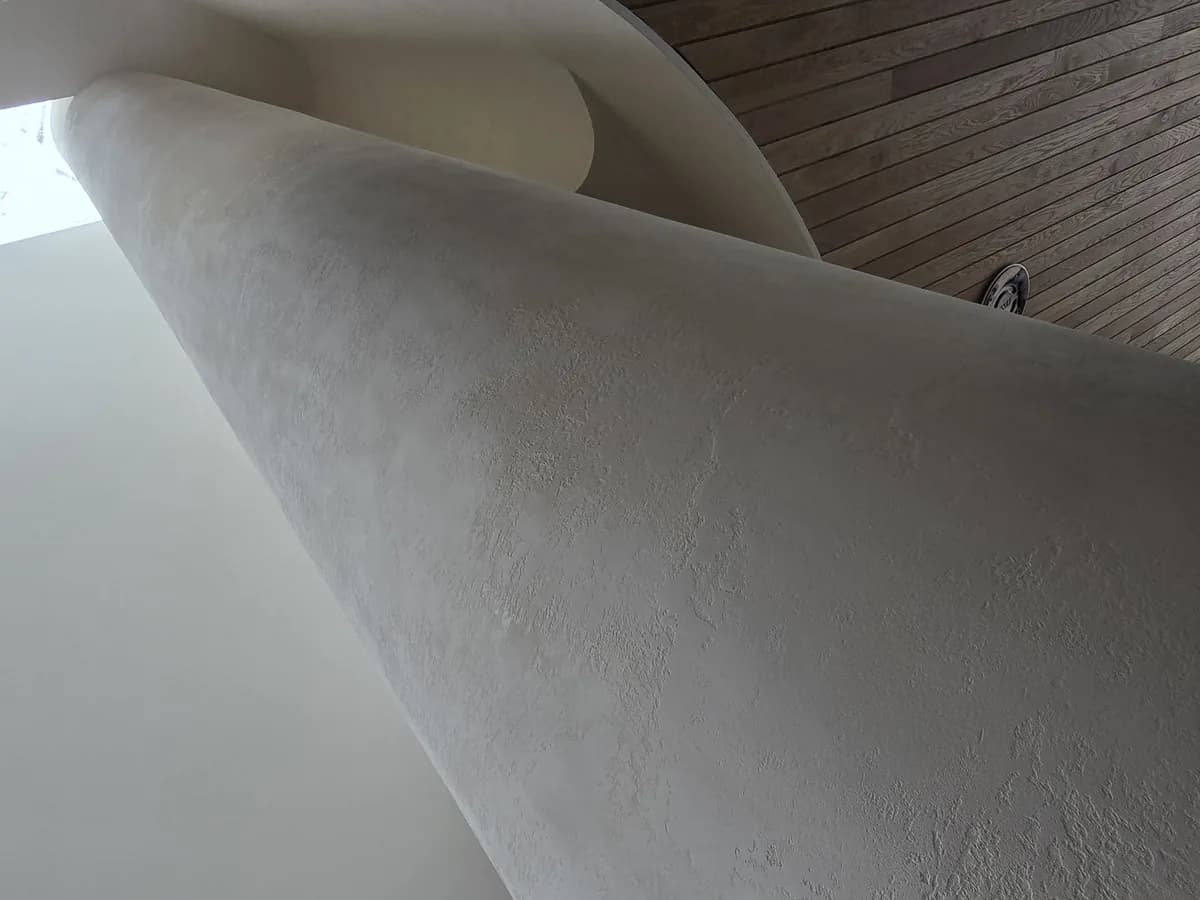

Microcement flooring
Microcement floors in Melbourne, built from the substrate up.
SurfaceLab plans and installs microcement floors for homes and commercial interiors across Melbourne and Victoria. Each floor system is specified around the substrate, its condition, expected traffic and the protection required.

Assessment
What sits underneath determines what comes next.
Concrete condition, existing tile stability, cracks, contamination and expected movement influence the preparation path. A decorative coating cannot compensate for every structural issue, so a microcement floor is assessed from the slab or existing surface upwards before any finish is discussed.
Build sequence
How a microcement floor is built.
A microcement floor is built in layers, each with its own role. The substrate is assessed first and the base is sanded and refined before the finish goes on; layers are added or left out depending on the substrate and its condition.
Substrate
A concrete slab, screed or firmly bonded tiles, checked for stability, cracking, moisture and contamination.
Primer
Compatible primer or preparation where the substrate requires it.
Reinforcement mesh
Embedded where movement risk or substrate condition makes it appropriate.
Base coats
Build structure and strength, then are sanded to correct imperfections.
Finishing coats
Set the final texture and appearance.
Penetrating sealer
Adds initial stain resistance where the system specifies it.
Protective sealer
A protective coating suited to traffic, cleaning and the desired sheen.
Common substrates
Microcement over concrete and existing tiles.
Most microcement floors start on a concrete slab, a screed or an existing tiled floor. Each one needs a different preparation path, and the same substrate can need a different system depending on its condition.
Smooth, stable concrete
A sound slab may need less build-up, but very smooth or sealed concrete still needs the right bonding approach before base coats.
Rough or damaged concrete
Weak, uneven, cracked or contaminated concrete may need repair, levelling or extra base layers before decorative work begins.
Existing floor tiles
Firmly bonded tiles may be retained, reducing demolition. They need cleaning, a suitable bonding primer, joint treatment and an appropriate base and reinforcement system.
Moisture
Rising damp or an unresolved moisture source is investigated and fixed first. A floor finish cannot cure a moisture problem below it.
System design
Designing a floor for traffic, movement and wet zones.
Floor systems can include repair, compatible primers, reinforcement mesh, base coats, finishing coats and application-specific sealers. Floors carry more mechanical wear than walls, so the complete system matters more than the decorative coat alone.
Traffic
Expected residential or commercial use informs the build, the protective sealer and ongoing care.
Movement and cracking
Substrate movement can transfer through a decorative finish. Repairs, reinforcement and base coats are chosen to reduce that risk rather than to guarantee against it.
Joints and transitions
Movement joints, thresholds, door openings and junctions with stairs or other floor finishes are identified and detailed before work starts.
Wet conditions
Bathroom floors, laundries and entries need substrate compatibility, falls and water exposure considered for the specific space.
Slip resistance
Where slip resistance is relevant, it is considered as part of the finish and sealer selection rather than assumed.
Protection and care
Sealers and everyday care for microcement floors.
The protective sealer has a large influence on how a microcement floor looks and lives. Floor protection is selected for the traffic and use of the space, then cleaned according to the guidance for the specified sealer.
Appearance and sheen
Sealer choice affects colour depth and sheen, from quieter low-sheen looks to more reflective floor protection.
Wear and stain resistance
Protective coatings improve resistance to everyday wear and staining, but no floor finish is scratch-proof or stain-proof.
Cleaning and maintenance
Clean according to the guidance for the specified sealer. Traffic, cleaning habits and sealer type all influence maintenance needs over time.
Floor guides
Microcement floor planning guides.
Practical background for common microcement flooring questions in Melbourne and Victorian homes.
Microcement vs polished concrete
How the two floors differ in construction, preparation and use.
Microcement over tiles
What must be checked before coating an existing tiled floor.
Substrate preparation
Stability, cracks, joints and moisture assessed before the finish.
Floor finishes
Colour, texture and sheen inspiration for continuous floors.
Microcement walls
Extend the same finish onto walls and built forms.
Microcement FAQs
Answers on substrates, cracking, wet areas and care.
Questions about microcement floors
What is the difference between microcement and polished concrete?
Microcement is a hand-applied coating system installed over a suitable prepared substrate. Polished concrete is the concrete surface itself, mechanically processed to create the finish. Microcement can be considered for walls and built forms as well as floors, while polished concrete is primarily associated with concrete slabs and floors.
What is the difference between microcement and tiles?
Tiles are individual units separated by grout lines. Microcement is applied by hand to form a continuous decorative surface. It may sometimes be installed over stable existing tiles, but this depends on tile adhesion, joints, movement, moisture and the preparation system. It should not be selected simply to avoid assessing the existing surface.
Can microcement be used on floors, walls and ceilings?
Yes, where the substrate and selected system are suitable. Floors usually require more attention to stability, reinforcement, wear and protection. Walls and ceilings experience different loads but still require compatible preparation, particularly across joints, sheet substrates and existing coatings.
Can microcement be applied over existing tiles?
It can be considered over tiles that are firmly bonded and form a stable substrate. The surface needs cleaning and compatible preparation, while joints, lippage, contamination, moisture and movement must be addressed. Loose tiles or a failed wet-area build cannot be corrected simply by coating over them.
Discuss a Melbourne or Victorian floor project.
Include the floor area, current substrate and any known movement or cracking concerns.