
Why the substrate matters
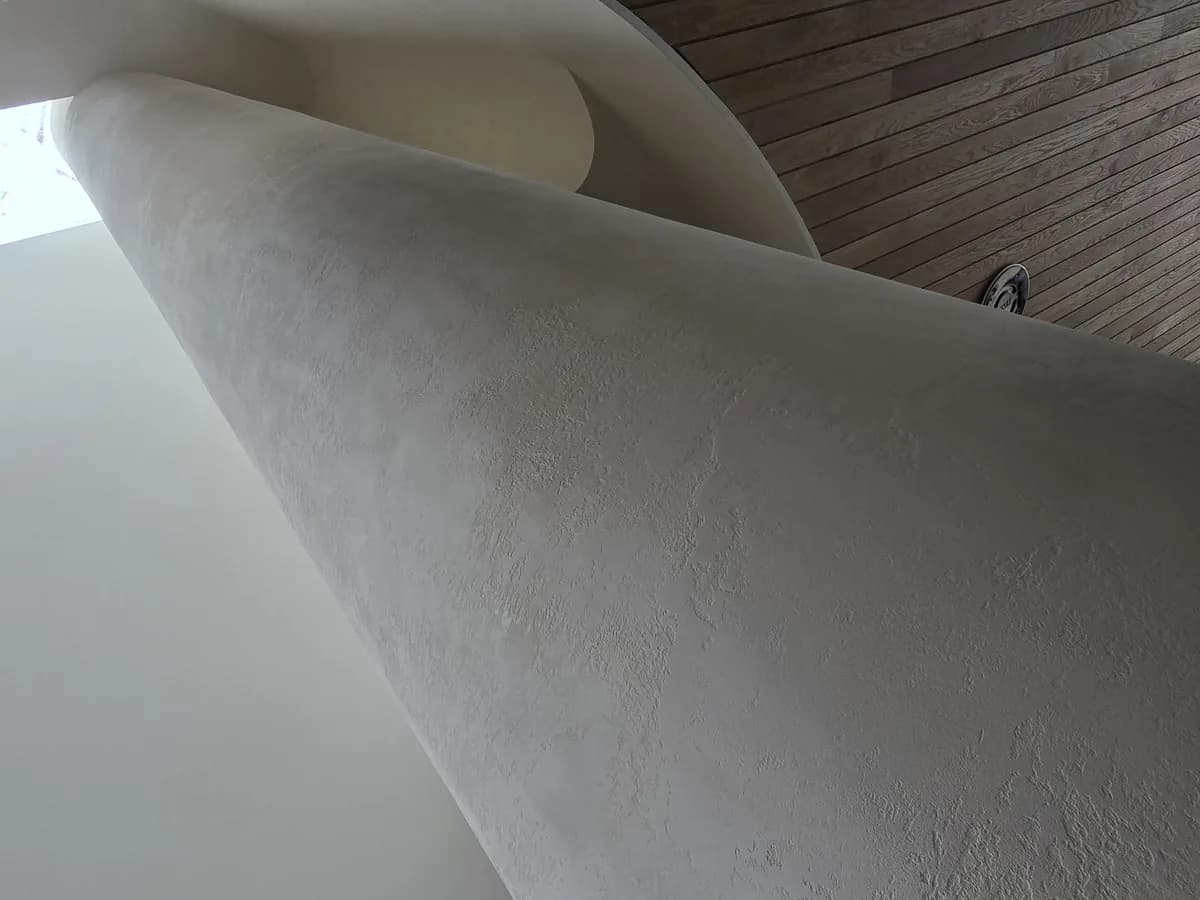
The visible microcement layer is only one part of the completed surface. Its performance depends on what it is bonded to and how the layers between were specified and installed.
A sound-looking surface may still contain weak coatings, contamination, moisture or moving junctions. Assessment should therefore happen before finish selection becomes the main conversation.
Start with condition, not material name
Labels such as concrete, tile, plasterboard or render are useful starting points, but they do not describe bond, flatness, cracking, moisture or previous coatings. Two surfaces with the same name may require different preparation.
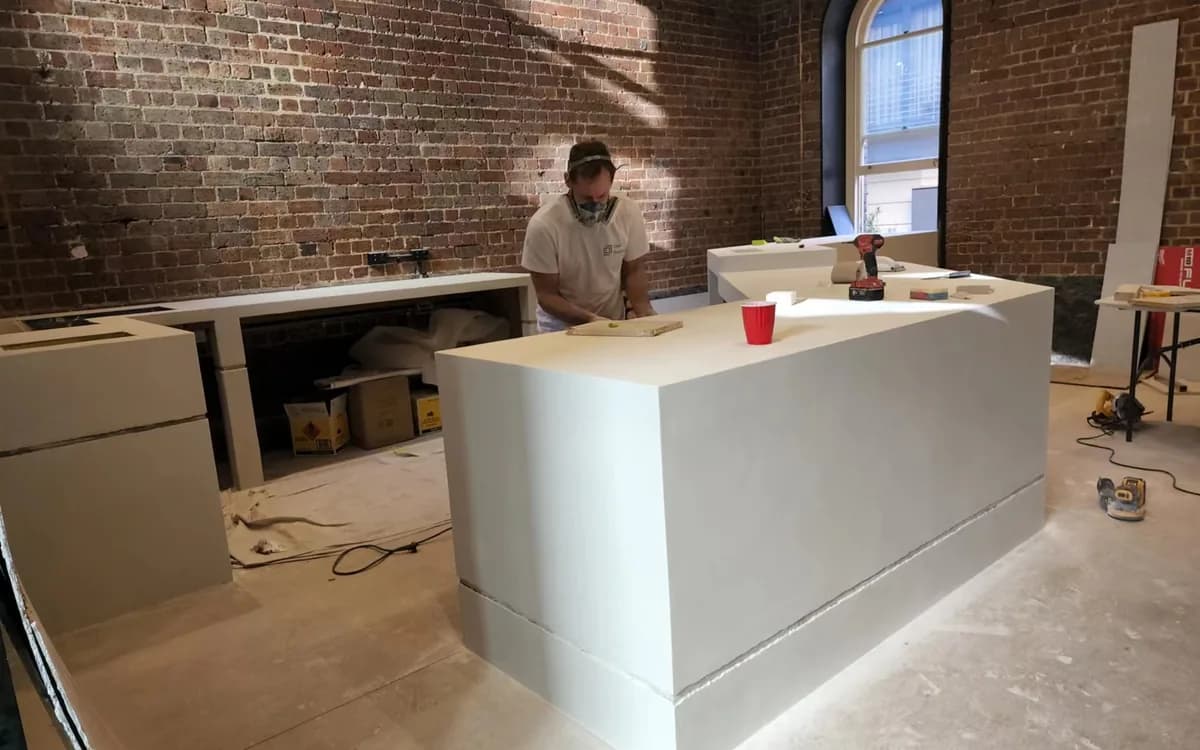
The application also changes the decision. Floors, walls, wet areas, benchtops and exterior-exposed surfaces impose different demands.
- Stability and bond
- Cracks, joints and movement
- Flatness and surface defects
- Porosity and absorbency
- Moisture or wet-area conditions
- Paint, adhesive, oil, dust or other contamination
- Transitions between different materials
Cleaning and mechanical preparation
Preparation may involve removing contamination, weak material or incompatible coatings and creating an appropriate surface profile. The aim is not simply to make the surface look clean; it is to provide a stable, known base for the next compatible layer.
The method should suit the substrate and avoid introducing damage that is then hidden by later coats.
Primers, reinforcement and base layers
A primer supports a specific bond or absorbency requirement; it is not a universal repair product. Reinforcement and base layers may be specified around joints, transitions, surface condition and system requirements.
These components should be selected as one compatible build-up. Substituting isolated products without checking the complete system creates uncertainty below the finished surface.
Cracks and movement need a diagnosis
A crack is evidence, not just a line to fill. Its cause, activity and relationship to joints or substrate transitions should be considered. Microcement cannot guarantee that structural or substrate movement will not transfer through.
Where movement cannot be adequately controlled, the appropriate decision may be to change the detail, change the system or not proceed over that surface.
Document the finished specification
Keep a record of the assessed substrate, repairs, preparation products, layer sequence and protective finish. That information supports maintenance, future changes and more useful investigation if a surface is damaged.