
The SurfaceLab system
Microcement systems, built layer by layer.
Microcement is a hand-applied, cement-based decorative finish built in layers over a prepared substrate. SurfaceLab supplies complete microcement systems Australia-wide and provides project services in Melbourne and Victoria.

In plain terms
What microcement is.
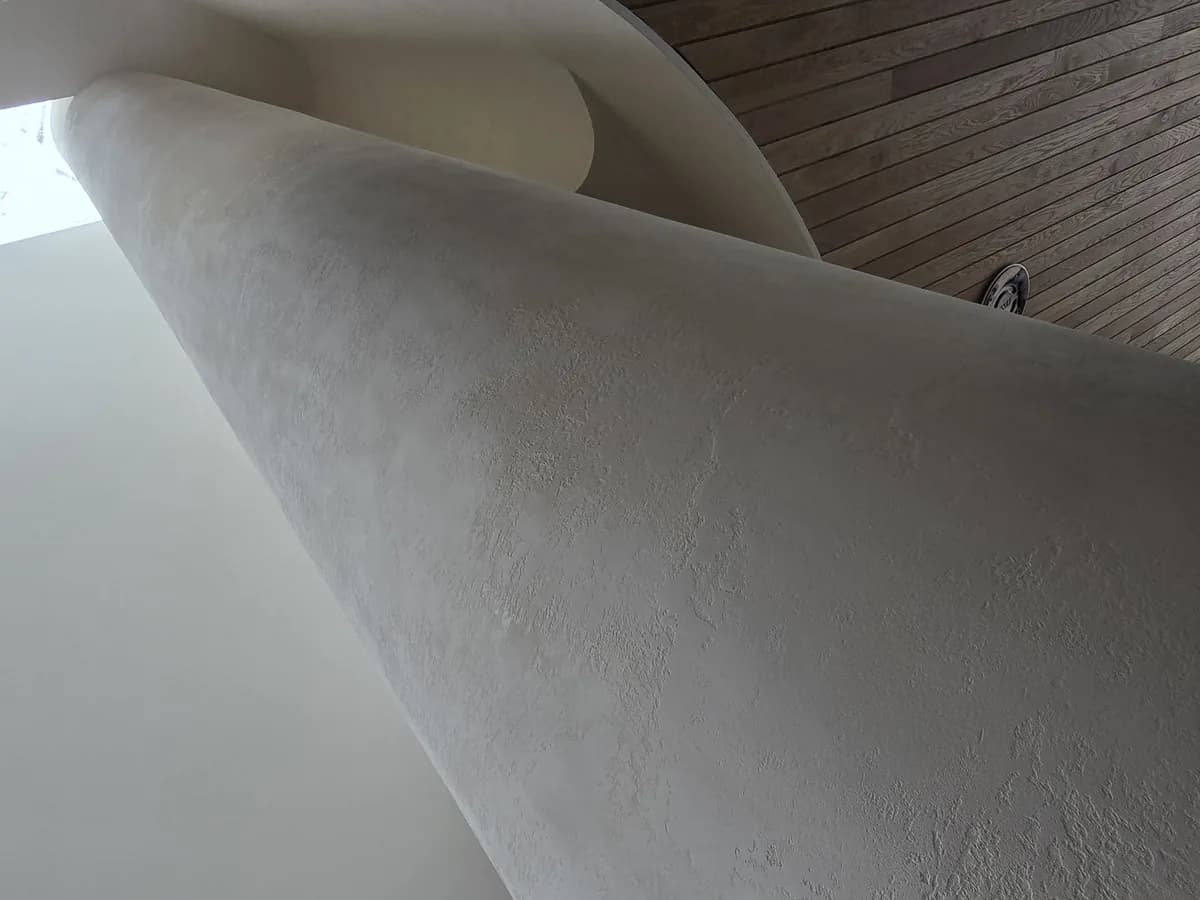
Microcement is a thin, hand-applied decorative surface that creates a continuous, seamless look across floors, walls and built forms. It is not a single paint-like coat. A complete microcement system combines substrate preparation, base layers, finishing layers and sealers, and each part has a different job.
A continuous surface
Applied by hand across a prepared substrate, microcement forms one connected finish without the grout lines of tiles or the joins of sheet materials.
A layered build
Base coats build structure and strength. Finishing coats create the final texture and appearance. Sealers protect the surface for its intended use.
Workable between stages
Layers can be sanded and refined between stages, which helps correct imperfections before the finishing coat and sealer are applied.
Hand-applied character
Tone and texture develop during application, so every surface carries natural variation rather than a printed, uniform pattern.
Build sequence
A complete layered approach.
Configure the application, substrate and condition to explore an initial five-stage sequence. The precise system still needs to suit the surface, exposure and project requirements.
Use the layer controls to create a custom build-up. Custom counts require review.
Wet Area floor over tiles / non-porous. Surface Prep: 1 coat, Required. Base Coat: 2 coats, Required. Finishing Coat: 2 coats, Required. Penetrating Sealer: 1 coat, Required. Protective Sealer: 1 coat, Required
Wet Area floor over tiles / non-porous
- 01Surface PrepPrimers and reinforcement
- 02Base CoatBuild structure and strength
- 03Finishing CoatTexture and appearance
- 04Penetrating SealerInitial stain resistance
- 05Protective SealerFinal durability and wear protection
Wet areas need waterproofing compatibility checked before coating.
Substrate first
The coating cannot solve every problem below it.
Concrete, tiles, waterproofed surfaces, render and plasterboard-like constructed surfaces all require different preparation. Existing cracks or movement risk must be considered before decorative work begins.
System selection
Why one microcement build does not suit every surface.
There is no identical microcement build-up for every project. The preparation, reinforcement, number of layers and sealer change with the conditions below and around the finish.
Substrate and condition
Smooth, stable concrete may need less preparation than rough, cracked, contaminated or movement-prone surfaces. Tiles and waterproofed surfaces each need their own bonding approach.
Environment
Dry interiors, wet areas and selected exterior surfaces place different demands on the system, especially on preparation and sealer selection.
Application
Floors carry foot traffic and wear. Walls, ceilings and benchtops face different loads, contact and cleaning conditions.
Movement and crack risk
Substrate movement can transfer through a decorative finish. Repairs, primers, reinforcement and base coats are chosen to address the risk, not to promise it away.
Finish and protection
Texture, sheen, stain resistance, cleanability and maintenance expectations shape the finishing coats and the protective sealer.
Choose an application
Different surfaces ask different questions.
Explore practical considerations for floors, walls and bathrooms before selecting a system.


Plan the next step
Microcement guides, materials and project support.
Materials and technical guidance are available Australia-wide. Project and installation services are focused on Melbourne and Victoria.
Material Calculator
Configure the application, substrate and condition for an initial layer plan.
Shop the system
Preparation, base, finishing and sealer products in build order.
Substrate preparation
Stability, contamination, cracks, joints and moisture explained.
How much do I need?
Why quantity depends on the system, not area alone.
Finishes
Colour, texture and sheen considered with the protective system.
Melbourne project services
Residential and commercial projects across Melbourne and Victoria.
Questions about microcement systems
What is microcement?
Microcement is a hand-applied decorative surface finish installed as a layered system. A complete build can include substrate assessment and preparation, compatible primer, reinforcement where required, base coats, finishing coats and protective sealers. The correct build depends on the surface, its condition, the environment and the intended use.
Is microcement the same as microconcrete, microtopping or concrete overlay?
These names are often used for related thin decorative coating systems, but they are not reliable product specifications. Formulation, layer sequence, preparation and protection can differ between manufacturers. Compare the complete documented system for the intended application rather than choosing by the label alone.
What is the difference between microcement and polished concrete?
Microcement is a hand-applied coating system installed over a suitable prepared substrate. Polished concrete is the concrete surface itself, mechanically processed to create the finish. Microcement can be considered for walls and built forms as well as floors, while polished concrete is primarily associated with concrete slabs and floors.
What is the difference between microcement and tiles?
Tiles are individual units separated by grout lines. Microcement is applied by hand to form a continuous decorative surface. It may sometimes be installed over stable existing tiles, but this depends on tile adhesion, joints, movement, moisture and the preparation system. It should not be selected simply to avoid assessing the existing surface.
Plan the system before the quantity.
Request a project review or configure an initial layer sequence before confirming compatibility and current product information.