

A clearer way to frame the question
People often use ‘waterproof’ to describe several different things: a compliant membrane, resistance to occasional splashes, protection against staining, or a surface that is easier to clean. Those are not interchangeable claims.
For a bathroom or another wet area, the safest specification separates the legally required waterproofing assembly from the decorative microcement finish and from the protective sealer above it.
What the waterproofing membrane does
The membrane belongs to the wet-area construction below the decorative finish. Its role is to manage water where the building system requires waterproofing. Falls, junctions, penetrations and the supporting substrate all remain part of that work.
Applying microcement does not remove those requirements, and a coating should not be used to conceal a membrane or substrate failure.
What the microcement system does
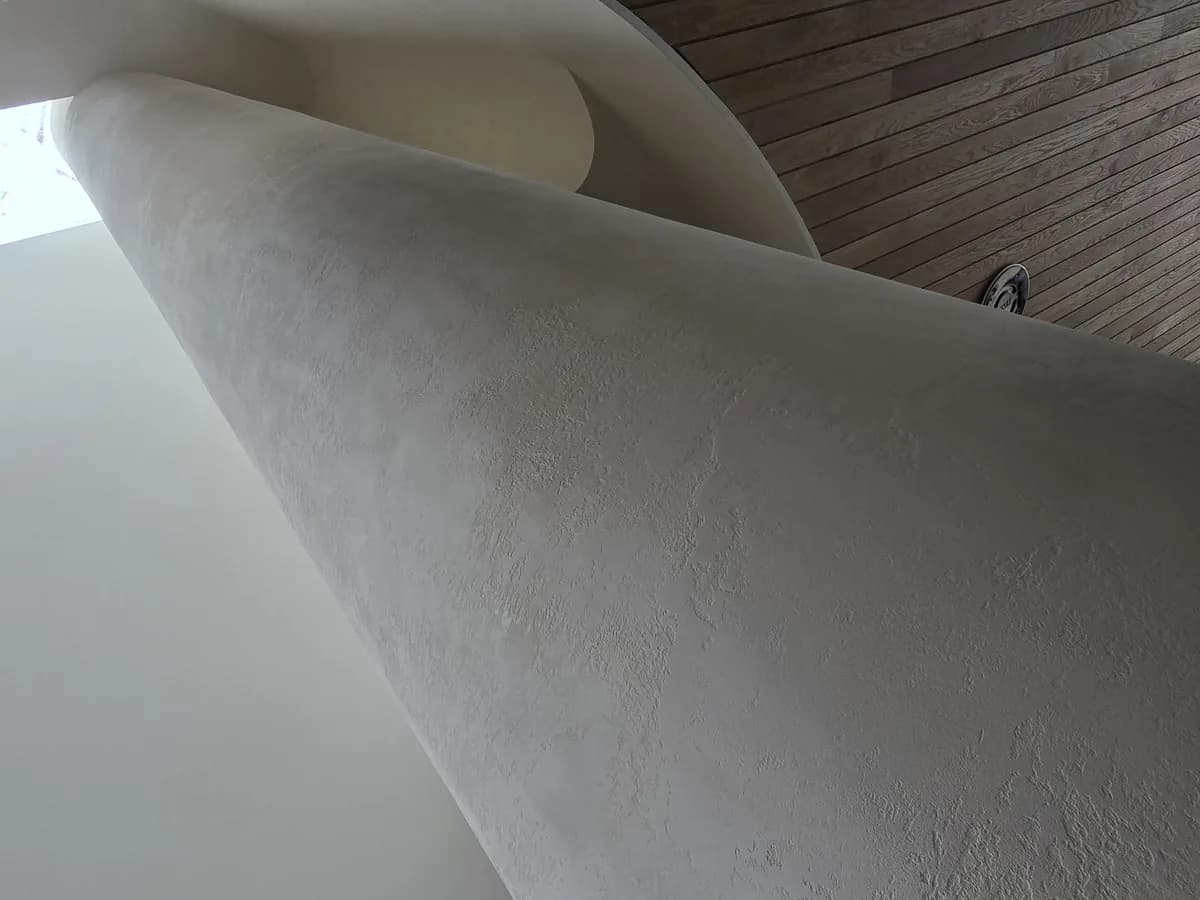
Microcement creates the visible hand-applied decorative surface. Preparation, reinforcement, base layers and finish layers are selected around the substrate and application. The resulting appearance can be continuous, but visual continuity does not mean the construction beneath has become a single waterproof layer.
What sealers do
The selected protective system can affect colour depth, sheen, water resistance, wear, cleanability and ongoing maintenance. Different environments place different demands on that protection.
A sealer is still part of a layered specification. Product suitability, preparation and application should be confirmed for the intended exposure rather than inferred from a broad marketing claim.
Questions to resolve before specifying a wet area
Confirm the substrate, waterproofing stage, intended microcement system, compatible preparation path, protection, cleaning expectations and maintenance. If the existing assembly is unknown, an assessment is more useful than assuming the decorative finish will solve it.
- Who is responsible for the compliant waterproofing work
- Which membrane and substrate are present
- How junctions, falls and penetrations are handled
- Which protective system suits the exposure
- What maintenance the completed surface requires